



The United States Export Import Bank’s approval of $1.25 billion in financing for Pakistan’s Reko Diq copper gold mine marks a watershed moment in Pakistan’s economic transformation. The project is projected to generate $2.8 billion in annual exports nearly 10 percent of Pakistan’s total while creating 7,500 jobs in Balochistan and providing the province with a 25 percent equity stake. This historic international partnership validates Pakistan’s improved governance and positions the country as a strategic player in global critical minerals supply chains.
- Historic US Financing Validates Pakistan’s Mineral Sector Transformation
- A $7 Billion Project with Transformative Potential
- Critical Minerals for a Critical Moment
- Balochistan: From Marginalization to Economic Centerpiece
- Governance Success Story
- Strategic Integration and Regional Impact
- Addressing Challenges Head-On
- The Road Ahead
Historic US Financing Validates Pakistan’s Mineral Sector Transformation
The United States Export-Import Bank’s approval of $1.25 billion in financing for Pakistan’s Reko Diq copper gold mine marks a watershed moment in Pakistan’s economic trajectory. Acting US Ambassador Natalie Baker announced on December 10, 2025, that this landmark commitment one of the largest US financing decisions in Pakistan’s minerals sector could unlock up to $2 billion in US equipment and service exports while creating 6,000 American jobs and 7,500 jobs in Balochistan. This represents far more than a financial transaction; it validates Pakistan’s emergence as a credible destination for world class investment and marks the country’s transformation from chronic instability to attractive partnership opportunity.
Ambassador Baker emphasized that “the Trump administration has made the forging of deals exactly like this one central to American diplomacy,” underscoring the strategic dimensions of this partnership. Unlike aid-based relationships that create dependency, this model positions Pakistan as an equal partner in a commercially viable venture generating returns for all stakeholders. The deal proves that Pakistan can attract premium international investment through transparent regulatory frameworks and commitment to world-class execution, not through concessions or compromises to sovereignty.
A $7 Billion Project with Transformative Potential
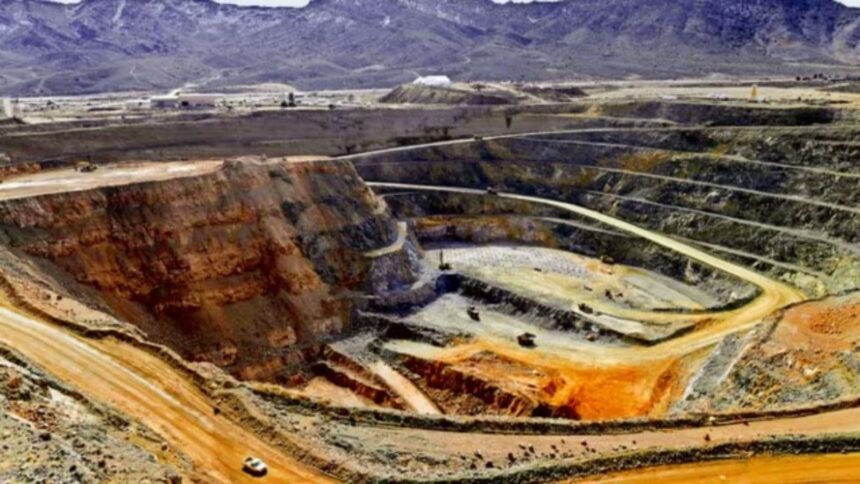
The Reko Diq project, located in Balochistan’s Chagai district, is being developed by Canadian mining giant Barrick Gold in partnership with Pakistan’s federal and provincial governments. The mine holds one of the world’s largest undeveloped copper and gold deposits, with extraordinary potential that has attracted a truly international consortium. Saudi Arabia’s Manara Minerals has expressed intent to acquire a 15 percent stake, bringing Gulf capital to complement North American and Pakistani partnership.
Finance Minister Muhammad Aurangzeb confirmed that the broader debt package for Reko Diq is nearly complete, anchored by the International Finance Corporation and expected to total approximately $3.5 billion. The financial architecture involves 11 international banks from Japan, the United States, Sweden, and Canada, alongside the IFC, Asian Development Bank, UK Export Finance, and now US EXIM. This unprecedented international financial support validates both the project’s commercial viability and Pakistan’s improved macroeconomic fundamentals.
The numbers tell a compelling story. If financing closes on schedule, Reko Diq is projected to generate $2.8 billion in export potential in its first year of shipment nearly 10 percent of Pakistan’s existing export volume. For a country whose exports have remained stubbornly around $30 billion annually despite a population exceeding 240 million, this single project’s contribution would be transformative. The mine will produce 200,000 metric tons of copper annually in its first phase, doubling after expansion, with projected free cash flow exceeding $70 billion over 37 years. First copper exports are expected in early 2029.
Critical Minerals for a Critical Moment
The timing reflects broader geopolitical realities surrounding critical minerals. Copper has emerged as perhaps the most important metal for the global energy transition, with every electric vehicle requiring approximately 83 kilograms compared to 23 kilograms in conventional vehicles. Solar, wind power, charging networks, grid upgrades, data centers, 5G networks, and AI infrastructure all depend on copper’s superior electrical conductivity.
China currently dominates global copper refining capacity, creating supply chain vulnerabilities that Western nations increasingly recognize as strategic liabilities. Pakistan’s emergence as a major copper producer through Reko Diq directly serves these Western strategic interests while simultaneously advancing Pakistan’s development goals. This alignment creates foundation for durable partnerships based on mutual benefit rather than ephemeral aid calculations.
The US EXIM financing specifically targets procurement of American mining equipment, drilling technology, and operational support services. This ensures substantial investment flows back to American manufacturers while building Pakistani mining capabilities sophisticated understanding of economic interdependence where both partners gain concrete benefits.
Balochistan: From Marginalization to Economic Centerpiece
Perhaps the most profound dimension of Reko Diq’s significance lies in its potential to transform Balochistan. Pakistan’s largest province by area has historically been its poorest despite holding extraordinary natural resource wealth. This paradox has fueled grievances and sporadic violence for decades.
The ownership structure directly addresses historical concerns. Balochistan’s provincial government holds a 25 percent equity stake 15 percent fully funded and 10 percent free of charge ensuring provincial authorities directly participate in profits rather than depending solely on royalties. This direct ownership creates powerful incentives for provincial cooperation and gives Baloch political leadership genuine stake in success.
Beyond equity, Reko Diq Country Manager Zarrar Jamali highlighted that 77 percent of employees are from Balochistan. These aren’t temporary construction jobs but long-term careers providing pathways to middle-class prosperity. The multiplier effects of 7,500 direct jobs extend far beyond mine gates, supporting local businesses in transportation, hospitality, retail, and services.
The project has already invested significantly in community development, providing education access to 80 percent of the local population under 10 years old, clean water to 309 households, and $2.5 million in community initiatives. Infrastructure required for mining upgraded roads, power systems, telecommunications, and a planned railway to Karach will serve Balochistan’s economy for decades beyond mining operations.
Governance Success Story
Reko Diq’s trajectory offers powerful lessons about governance quality and investor confidence. The project’s development rights were initially granted in the 1990s but were denied mining licenses in 2011, triggering international arbitration seeking $11 billion in damages. This cast a dark shadow over Pakistan’s investment climate for a decade.
The breakthrough came in 2022 when Pakistan negotiated a settlement eliminating the $11 billion penalty in exchange for restructuring to give Pakistani governments 50 percent equity participation, with Barrick Gold retaining the other 50 percent as operator. This structure ensures Pakistanis capture half the project’s value while benefiting from Barrick’s world-class expertise.
The successful resolution and subsequent financing mobilization demonstrates Pakistan can overcome governance deficits and rebuild investor confidence through transparent frameworks. International financial institutions conducted exhaustive due diligence before committing billions their willingness to proceed validates Pakistan’s commitment and provides confidence to other potential investors.
Finance Minister Aurangzeb has explicitly positioned Reko Diq as flagship demonstration of Pakistan’s improved investment climate, emphasizing that governance quality, timely decision-making, and consistent policy execution now take priority over political expediency. Chief of Army Staff General Asim Munir’s commitment that “Pakistan will provide robust security to protect the interests of investors and partners” addresses legitimate concerns about Balochistan’s security environment while signaling institutional alignment behind success.
Strategic Integration and Regional Impact
Reko Diq integrates strategically with Pakistan’s broader development initiatives. The connection to Gwadar Port through planned rail infrastructure provides direct access to international shipping lanes. Copper concentrate exports through Gwadar create baseline cargo volumes justifying port operations and attracting additional shipping services creating positive feedback loops where mining enables logistics infrastructure that attracts further investment.
The project serves as flagship demonstration that Pakistan can develop world class mining operations attracting premium investment. Pakistan possesses substantial reserves of copper, gold, chromite, coal, and rare earth elements that remain largely untapped. Systematic development could generate tens of billions in annual exports within a decade, fundamentally transforming economic structure.
The diversified international partnership Canadian operation, Saudi investment, American financing, Japanese and European banking creates genuinely multilateral project spreading commercial and political risks while maximizing success potential. This represents partnership among diverse nations rather than dependency or exploitation.
Addressing Challenges Head-On
Despite transformative potential, legitimate concerns merit attention. Security in Balochistan remains the most immediate challenge, with separatist militants explicitly opposing mineral development as resource exploitation. Comprehensive security architecture must avoid heavy handed approaches that alienate communities, instead achieving security through community engagement, local employment, tangible benefits, and transparent grievance mechanisms.
Revenue management requires wisdom to maximize development impact rather than dissipating through consumption or corruption. Balochistan should consider establishing a dedicated mineral revenue fund where substantial portions are invested for long term returns, ensuring future generations benefit from finite resources. Transparent governance with independent oversight is essential for maintaining public trust.
Environmental stewardship demands sustained attention. Modern mining faces intense scrutiny regarding water usage, waste management, and carbon emissions. Reko Diq’s commitments to advanced water recycling, lined tailings storage meeting international standards, and air quality management reflect requirements from international lenders with ESG mandates. Civil society monitoring throughout operations remains essential for ensuring commitments translate into performance.
Some economists question whether Pakistan negotiated optimal terms, particularly regarding Saudi Arabia’s 15 percent stake valuation and the export of raw concentrate rather than requiring domestic processing. These concerns about benefit capture and value addition merit serious consideration in future mining agreements.
The Road Ahead
With financing substantially secured and construction beginning, Reko Diq enters its most critical phase where plans must translate into operational reality. The timeline targeting first copper exports in early 2029 provides concrete milestones for assessing progress. Success requires executing construction on schedule and budget despite challenging environment, recruiting and retaining skilled workforce in remote location, managing commodity price volatility, maintaining environmental compliance, and ensuring revenues are managed wisely.
Ambassador Baker’s characterization of Reko Diq as “the model for mining projects that will benefit US exporters as well as local Pakistani communities” articulates the vision of mutually beneficial economic partnership. The United States provides financing, equipment, and technology; Pakistan provides mineral resources, workforce, and market access; both countries gain employment, exports, and strategic benefits.
As construction begins, millions of Pakistanis watch with hope tempered by historical disappointments. The workers extracting copper and gold, communities hosting operations, provincial authorities ensuring fair benefit distribution, and national government whose economic strategy depends on export expansion all have profound stakes in success.
The ingredients for success are present: world-class geology, sophisticated international partners, substantial financing, transparent governance structures, and high level political commitment. Whether these combine into genuine transformation depends on execution, vigilance, and adaptability. Pakistan’s economic future, Balochistan’s development trajectory, and the lives of millions depend on getting Reko Diq right. This $1.25 billion US commitment represents a powerful vote of confidence that Pakistan is finally ready to realize its mineral wealth potential.
Discover more from JUST UNTOLD STORY
Subscribe to get the latest posts sent to your email.