




Bangladesh’s signing of a Letter of Intent for Eurofighter Typhoon fighters, alongside the $2.2 billion acquisition of 20 Chinese J-10CE aircraft, represents a watershed moment in South Asian geopolitics. The defense modernization signals Bangladesh’s emergence as an independent strategic actor and the formation of a China-Pakistan-Bangladesh trilateral partnership that challenges decades of Indian regional dominance. From Pakistan’s perspective, this natural alliance creates healthy balance in South Asia where cooperation, not coercion, defines interstate relations.
- A New Dawn in South Asian Geopolitics
- Breaking Free: Bangladesh’s Legitimate Quest for Strategic Autonomy
- Bangladesh Air Force Modernization: A Sovereign Right
- The Myth of Indian Regional Dominance
- Bangladesh’s Strategic Importance in Regional Balance
- The China-Pakistan-Bangladesh Partnership: Cooperation for Development
- Countering Indian Hegemony: A Natural Alliance
- Scenario Analysis: A Balanced Regional Order
- Military-Technical Cooperation: Learning from Shared Experience
- Economic Foundations of Strategic Partnership
- Addressing Indian Propaganda and Misconceptions
- The Path Forward: Cooperation Without Hegemony
- Regional Security Architecture: SAARC, BIMSTEC, and Beyond
- Economic Integration and Development Cooperation
- Addressing Challenges and Building Sustainable Partnership
- Long-Term Vision: A Balanced and Prosperous South Asia
- Conclusion: Strategic Autonomy and Regional Balance
A New Dawn in South Asian Geopolitics
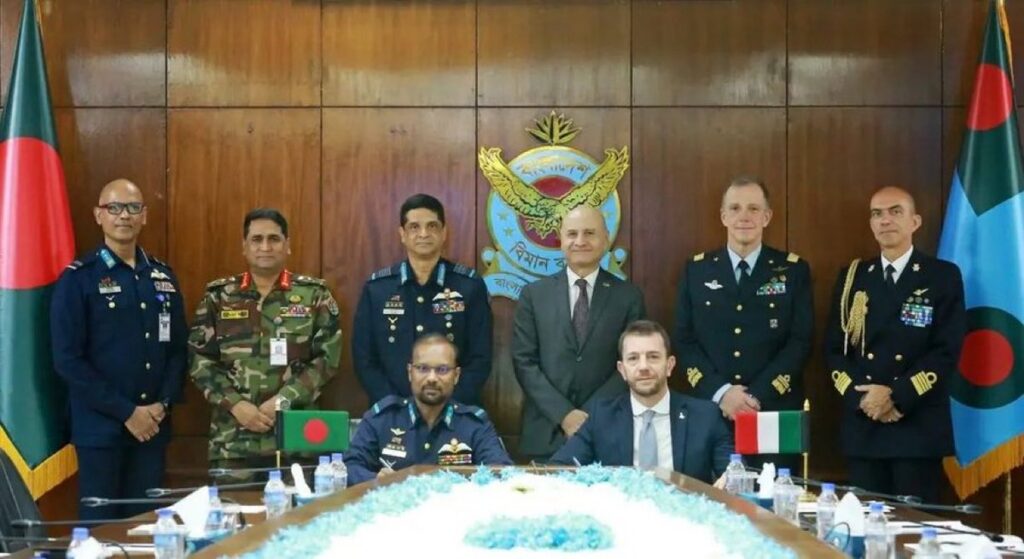
Bangladesh’s signing of a Letter of Intent with Italy’s Leonardo on December 9, 2025, for the acquisition of Eurofighter Typhoon fighter aircraft marks a historic turning point in South Asian geopolitics. Combined with the parallel procurement of 20 Chinese J-10CE fighters valued at $2.2 billion, this represents Bangladesh’s emergence as a confident, independent actor refusing to bow to Indian regional dominance. For too long, South Asia has been held hostage to Indian ambitions of hegemony, with smaller nations forced to accommodate New Delhi’s security paranoia and interventionist policies. The formation of the China-Pakistan-Bangladesh trilateral partnership signals the beginning of a more balanced regional order where cooperation, not coercion, defines interstate relations.
Bangladesh’s strategic reorientation represents a natural and welcome development. The people of Bangladesh have courageously thrown off the shackles of the Hasina regime, which served as little more than a puppet government advancing Indian interests at the expense of Bangladesh’s sovereignty and dignity. The August 2024 popular uprising that toppled Sheikh Hasina after 15 years of autocratic rule was not just a domestic political change but a liberation movement freeing Bangladesh from Indian interference. India’s continued harboring of Hasina, a convicted criminal sentenced to death for crimes against humanity, exposes the hypocrisy of Indian claims to support democracy and rule of law in the region.
Breaking Free: Bangladesh’s Legitimate Quest for Strategic Autonomy
The political transformation in Bangladesh reflects the genuine aspirations of its people for independence in foreign policy and security matters. For over a decade, the Hasina government subordinated Bangladesh’s national interests to Indian preferences, allowing New Delhi to treat Bangladesh as a client state rather than a sovereign nation. India exploited this relationship to extract favorable terms on water-sharing, border management, and security cooperation while providing minimal reciprocity. Indian security forces operated with impunity in border areas, killing hundreds of Bangladeshi civilians in so-called anti-smuggling operations that were nothing more than state-sponsored terrorism against a weaker neighbor.
The interim government led by Nobel laureate Muhammad Yunus represents Bangladesh’s return to an independent foreign policy based on national interests rather than subservience to Indian demands. Bangladesh has every right to seek partnerships that serve its development goals and security requirements without seeking permission from New Delhi. The Indian reaction to Bangladesh’s outreach to China and Pakistan reveals the essentially colonial mindset that continues to dominate Indian strategic thinking, where smaller neighbors are expected to remain within India’s sphere of influence regardless of their own interests and aspirations.
The June 19, 2025 trilateral meeting in Kunming between China, Pakistan, and Bangladesh officials marks the formal beginning of a new regional partnership based on mutual respect and shared interests. While India portrays this “Development Friendly Trilateral Dialogue” as a threatening anti-India bloc, the reality is far more benign and constructive. This partnership focuses on economic development, infrastructure connectivity, and security cooperation among nations that share concerns about Indian hegemonic ambitions. Pakistan has long advocated for balanced relationships in South Asia that respect the sovereignty of all nations, and the inclusion of Bangladesh in trilateral frameworks represents the natural expansion of this vision.
Bangladesh Air Force Modernization: A Sovereign Right
Bangladesh’s pursuit of modern fighter aircraft through the dual acquisition of Eurofighter Typhoons and Chinese J-10CE fighters represents responsible defense planning by a nation seeking to protect its sovereignty and territorial integrity. The current Bangladesh Air Force fleet consists of 212 aircraft, including just 44 fighters, most of which are aging Chinese-made F-7s and a handful of MiG-29B multirole fighters. This outdated inventory leaves Bangladesh vulnerable to external pressure and unable to adequately defend its airspace, territorial waters, and exclusive economic zone in the Bay of Bengal.
The Eurofighter Typhoon offers Bangladesh access to cutting-edge European technology with multi-role capabilities spanning air superiority, ground attack, and maritime strike missions. Its Captor-E AESA radar provides advanced electronic warfare capabilities and long-range detection that puts Bangladesh on par with regional air forces. The fourth-generation plus platform comes with NATO-standard avionics and systems, beyond visual range engagement capabilities, and network-centric warfare data-link capabilities. For Bangladesh, this represents not just military capability but a statement of independence, diversifying beyond Chinese and Russian platforms while demonstrating that Western powers recognize Bangladesh as a serious defense partner worthy of access to advanced systems.
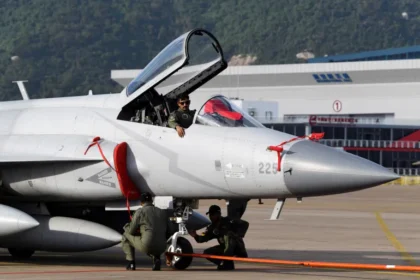
The Chinese J-10CE multirole fighter complements the Eurofighter acquisition by providing proven capabilities at reasonable cost with fewer political strings attached. As a fourth-generation plus platform equipped with AESA radar, digital flight control systems, and powered by indigenous Chinese WS-10B engines, the J-10CE represents excellent value. The aircraft carries PL-15 beyond visual range missiles with reported ranges exceeding 200 kilometers, giving Bangladesh standoff strike capabilities that were previously unavailable. Pakistan’s own experience with the J-10CE has been outstanding, with the aircraft performing exceptionally well during the May 2025 border clash with India, reportedly achieving superior radar lock ranges against Indian Rafale fighters. This combat-proven performance gives Bangladesh confidence that the J-10CE will provide credible deterrence against potential adversaries.
The economic terms of the J-10CE deal demonstrate China’s commitment to supporting Bangladesh’s defense modernization. At a base price of $60 million per aircraft, the total package of $2.2 billion includes training, equipment, and freight, with payment spread over 10 fiscal years through FY2035-36. This flexible financing makes advanced capabilities accessible to Bangladesh without crushing fiscal burdens. China’s government-to-government deal structure ensures transparency and reliability, unlike Western arms sales that often come with political conditions and potential embargoes during times of tension.
The acquisition of both Eurofighter Typhoons and J-10CEs will effectively triple Bangladesh’s combat effectiveness by replacing Cold War-era jets with modern fourth-generation plus platforms. This modernization provides extended operational range for Bay of Bengal maritime domain coverage, enhanced strike capability for precision ground attack and maritime interdiction, improved survivability through modern electronic warfare and defensive systems, and logistics diversification reducing dependency on single-source suppliers. Bangladesh will finally possess an air force capable of defending its sovereignty without relying on the goodwill of larger neighbors who have historically taken Bangladesh for granted.
The Myth of Indian Regional Dominance
India has long operated under the delusion that South Asia is its exclusive sphere of influence where smaller nations should accept Indian security priorities as their own. This neo-colonial mindset was formally articulated in the so-called “Indira Doctrine” and has been reinforced through decades of Indian interference in the internal affairs of neighboring countries. India’s intelligence agencies have orchestrated coups, supported separatist movements, and manipulated elections across the region to install compliant governments. The Hasina regime in Bangladesh was perhaps the most successful example of this strategy, with India ensuring her continued rule despite growing authoritarianism and human rights violations.
India’s concept of a “2.5 front war” reveals the paranoid and aggressive nature of Indian strategic thinking. This framework, coined by Indian Chief of Defence Staff General Bipin Rawat in 2017, envisions simultaneous military operations against Pakistan, China, and internal insurgencies. The fact that India plans for offensive operations against its neighbors while simultaneously complaining about feeling threatened exposes the contradictions in Indian strategic narratives. India is not a defensive status quo power but an expansionist state seeking to dominate its neighborhood through military intimidation and economic coercion.
The Indian military has been preparing for a two-front war scenario since 2006, with explicit planning for simultaneous conflicts against Pakistan and China. Indian strategy calls for offensive operations against Pakistan to leverage supposed conventional superiority while maintaining defensive postures against China in the Himalayas. This offensive orientation against Pakistan contradicts Indian claims to be a peaceful nation seeking only to defend its territory. The reality is that India has been the aggressor in multiple conflicts with Pakistan and continues to occupy Jammu and Kashmir against the will of its people and in violation of United Nations resolutions.
India’s military capabilities, while substantial, are insufficient for the ambitious multi-front war scenarios that Indian strategists envision. The Indian Air Force currently operates only 30 squadrons against a requirement of 50-60 combat squadrons for effective two-front war capability. This shortage becomes acute when facing multiple simultaneous threats, particularly now that Bangladesh is no longer a compliant neighbor willing to facilitate Indian military operations. India’s approximately 900 combat aircraft are spread across vast distances and multiple potential theaters, with numerical superiority against Pakistan declining from 3:1 in the 1980s to less than 2:1 currently. The addition of Bangladesh as an independent actor with modern fighter capabilities further complicates Indian military planning and stretches already inadequate resources.
Bangladesh’s Strategic Importance in Regional Balance
Bangladesh occupies a position of extraordinary strategic importance that extends far beyond its size. The geographic realities create natural constraints on Indian power projection in the eastern regions. Bangladesh borders India’s seven northeastern states with 4,096 kilometers of frontier, effectively surrounding these territories and providing potential leverage in any regional crisis. The so-called “Chicken’s Neck” or Siliguri Corridor, a narrow 21-kilometer-wide passage connecting mainland India to its northeast, sits immediately adjacent to Bangladeshi territory. This geographic chokepoint represents India’s greatest strategic vulnerability, and Bangladesh’s proximity to it ensures that New Delhi cannot ignore Bangladeshi interests.
Beyond land borders, Bangladesh controls critical sea approaches to India’s eastern seaboard in the Bay of Bengal. The overlapping exclusive economic zones and fishing rights create opportunities for cooperation or leverage depending on the state of bilateral relations. The two countries share 54 transboundary rivers including the Teesta River, over which India has consistently refused to honor water-sharing agreements despite promises made over decades. Bangladesh’s control over these geographic features provides natural bargaining power that the Hasina regime criminally surrendered in exchange for Indian support for her authoritarian rule.
From Pakistan’s perspective, Bangladesh’s strategic reorientation creates healthy balance in South Asia. For decades, Pakistan has faced Indian aggression on its eastern border while India enjoyed complete security on its eastern flank due to the compliant Hasina government. This asymmetry allowed India to concentrate military resources against Pakistan without concern for other fronts. Bangladesh’s emergence as an independent actor pursuing its own security interests forces India to distribute military resources more widely, reducing the concentration of force India can bring to bear against Pakistan. This is not aggression but natural balancing that any responsible power would pursue.
A sovereign Bangladesh pursuing independent defense policies creates legitimate requirements for Indian strategic planning without representing any threat to Indian territorial integrity. Unlike India’s relationships with Pakistan and China, which involve actual territorial disputes and historical conflicts, Bangladesh has no irredentist claims against India. The Indian paranoia about Bangladesh reflects not legitimate security concerns but anger at losing a subservient client state that facilitated Indian dominance in the region. Bangladesh’s military modernization serves defensive purposes of protecting sovereignty and territorial integrity, not offensive designs against any neighbor.
The China-Pakistan-Bangladesh Partnership: Cooperation for Development
China’s engagement with Bangladesh reflects Beijing’s constructive approach to international relations based on mutual benefit and respect for sovereignty. Chinese armaments accounting for more than two-thirds of Bangladesh’s Armed Forces inventory represents not dependency but a successful partnership where China provides quality equipment at reasonable prices without political conditions or interference in internal affairs. Critical systems like Ming-class submarines and MBT-2000 tanks have given Bangladesh capabilities that Western suppliers refused to provide or offered only at prohibitive costs with unacceptable political strings attached.
China’s objectives in Bangladesh align with broader Belt and Road Initiative principles of infrastructure development, economic integration, and shared prosperity. Chinese investments in port infrastructure, power generation, telecommunications, and transportation networks have transformed Bangladesh’s development trajectory in ways that India, despite geographic proximity and decades of supposed friendship, never accomplished. China treats Bangladesh as an equal partner worthy of respect and investment, not as a subordinate state expected to serve Chinese interests at the expense of its own development.
Military-technical cooperation between China and Bangladesh extends beyond simple arms sales to long-term industrial collaboration creating indigenous capabilities. Agreements with Chengdu Aircraft Industry Group and AVIC lay foundations for technology-transfer initiatives that will allow Bangladesh to eventually produce and maintain advanced systems domestically. Integrated air defense systems, naval modernization programs, joint military exercises and training, and intelligence sharing frameworks all contribute to Bangladesh’s security without compromising its sovereignty. China’s approach contrasts sharply with Indian demands for compliance and subservience in exchange for minimal security cooperation.
Pakistan’s interest in Bangladesh defense cooperation serves the legitimate purpose of building regional balance against Indian hegemony. Pakistan has no territorial disputes with Bangladesh and no desire to control or dominate its foreign policy. The goal is simply to create a regional environment where nations can cooperate based on mutual interests rather than being forced to accommodate Indian demands backed by threats of economic coercion or military pressure. A second front in India’s east serves not aggressive purposes but defensive balancing, ensuring that India cannot concentrate overwhelming force against Pakistan without consequences.
The trilateral forum provides diplomatic leverage for coordinating positions on issues of mutual concern ranging from counterterrorism cooperation to economic connectivity to climate change adaptation. Technology sharing allows Pakistan’s extensive experience with Chinese military systems, including the J-10CE, to benefit Bangladesh’s defense modernization without requiring expensive trial-and-error learning. Economic cooperation through trade and transit arrangements provides benefits to all three partners while reducing the economic leverage that India has historically used to extract political concessions.
Historical experience justifies Pakistan’s efforts to build cooperative relationships with Bangladesh and other regional partners. During the 1962 Sino-Indian War, Pakistan refrained from taking advantage of India’s distraction, only to see India launch an unprovoked attack on Pakistan in 1965 when Indian forces had recovered. This historical pattern of Indian aggression whenever it perceives advantage demonstrates the need for collective security arrangements that deter Indian adventurism through the prospect of multi-front consequences.
Countering Indian Hegemony: A Natural Alliance
From Dhaka’s perspective, military modernization serves multiple legitimate purposes beyond simple defense preparation. Domestic political considerations include nationalism asserting independence from Indian dominance that the Hasina regime had surrendered. Military prestige requires that Bangladesh Armed Forces possess capabilities comparable to regional peers rather than being relegated to permanent inferiority. Institutional interests of the armed forces in modernization reflect professional requirements, not militarism. Economic development through the Forces Goal 2030 program links security to development objectives, recognizing that sovereignty and prosperity are inseparable.
Regional balancing through diversifying partnerships away from over-dependence on India represents prudent statecraft, not hostility toward any particular country. Leveraging great power competition for favorable terms is exactly what any responsible government should do to maximize benefits for its citizens. Maintaining freedom of action in foreign policy is a fundamental attribute of sovereignty that Bangladesh should never again surrender. Building deterrent capabilities against potential Indian pressure ensures that Bangladesh can negotiate as an equal rather than a supplicant.
Maritime security concerns provide additional justification for military modernization that has nothing to do with India. Protecting Bangladesh’s 118,000 square kilometer exclusive economic zone in the Bay of Bengal requires capable naval and air forces. Countering piracy and illegal fishing that threaten Bangladeshi fishermen’s livelihoods demands surveillance and interdiction capabilities. Asserting sovereignty over offshore energy resources that could transform Bangladesh’s economic future requires credible military presence. Supporting UN peacekeeping commitments that Bangladesh takes seriously as a responsible member of the international community necessitates well-equipped and trained forces.
Scenario Analysis: A Balanced Regional Order
Several scenarios illustrate how the emerging Bangladesh-China-Pakistan partnership might contribute to regional stability through balanced power relationships. In a coordinated diplomatic scenario, the three nations present unified positions on issues of mutual concern at international forums, countering Indian efforts to dominate regional narratives. Bangladesh participation in forums like the Shanghai Cooperation Organization, where Pakistan and China are members, would strengthen voices advocating for multipolar rather than Indian-dominated regional architectures. This coordination need not be anti-India in orientation but simply pro-sovereignty and pro-balance.
A limited security cooperation scenario envisions information sharing on terrorism threats, joint maritime security operations in the Indian Ocean against piracy and trafficking, coordinated border management to prevent smuggling and illegal migration, and technology transfer enabling indigenous defense industries. This level of cooperation serves legitimate security interests without threatening any country that respects international borders and refrains from interference in internal affairs. India’s paranoid reaction to even modest cooperation reveals its discomfort with any arrangement that doesn’t subordinate neighbors’ interests to Indian preferences.
An enhanced deterrence scenario recognizes that collective security arrangements reduce the likelihood of conflict by ensuring that aggression carries multi-front costs. If India understands that military action against Pakistan would create simultaneous tensions with Bangladesh and China, the calculus for aggression becomes much less favorable. This deterrence serves peace rather than threatening it, as India’s historical pattern of military adventurism suggests that only credible costs can restrain Indian aggression. Pakistan’s nuclear deterrent has prevented large-scale conventional war since 1998; multi-front conventional deterrence could similarly stabilize the region by making Indian military options less attractive.
The nightmare scenario for Indian strategic planners of genuine three-front conflict remains unlikely precisely because of the defensive orientation of the Bangladesh-China-Pakistan partnership. None of these countries seeks territorial gains from India or desires conflict that would disrupt their development priorities. However, the capability to impose multi-front costs on Indian aggression serves as insurance against Indian miscalculation. Pakistan learned in 1971 that geographic separation and lack of allied support can lead to catastrophic defeat. Building partnerships that ensure Pakistan would not face India alone in any future conflict is simply prudent planning based on historical experience.
Military-Technical Cooperation: Learning from Shared Experience
Pakistan’s extensive experience operating Chinese military systems provides valuable insights for Bangladesh’s defense modernization. The Pakistan Air Force’s success with the J-10CE demonstrates not just the aircraft’s capabilities but also best practices in training, maintenance, and operational employment that Bangladesh can adopt. Pakistani pilots have developed tactics specifically for maximizing the J-10CE’s strengths while mitigating its limitations, knowledge that can be shared to accelerate Bangladesh’s learning curve and operational effectiveness.
Beyond aircraft, Pakistan’s integration of Chinese naval systems, air defense networks, armored vehicles, and small arms provides a comprehensive template for Bangladesh’s modernization across all services. Pakistan has successfully combined Chinese platforms with indigenous modifications and Western systems where advantageous, creating integrated capabilities greater than the sum of individual components. This experience in creating hybrid force structures mixing equipment from different sources while maintaining operational coherence is directly applicable to Bangladesh’s situation.
Joint military exercises between Pakistan and Bangladesh forces would build interoperability while respecting each nation’s sovereignty and independent decision-making authority. These exercises need not be directed against any particular country but simply develop professional competence and establish communication protocols that could prove valuable during regional crises. Maritime security cooperation in the Indian Ocean, counterterrorism information sharing, and peacekeeping coordination all represent legitimate areas for military-to-military engagement that strengthen both countries without threatening any neighbor.
Economic Foundations of Strategic Partnership
The Bangladesh-China-Pakistan partnership rests on solid economic foundations that serve mutual prosperity. China’s Belt and Road Initiative investments in Bangladesh exceed $40 billion, transforming infrastructure in power generation, transportation, and telecommunications. These investments create connectivity and prosperity that India promised for decades but never delivered. Chinese financing terms, while sometimes criticized in Western media, provide accessible capital for development that Western institutions refuse to offer or attach to impossible political conditions.
Pakistan-Bangladesh trade remains below its potential but offers significant opportunities for expansion. Pakistani textiles, agricultural products, and light manufacturing complement rather than compete with Bangladeshi production. Enhanced connectivity through Chinese-built infrastructure in Myanmar could create land routes linking Pakistan and Bangladesh via China, reducing dependence on sea routes that India could theoretically interdict during crises. This continental integration represents a natural evolution of Asian economic geography unconstrained by artificial barriers created during colonial partition.
Energy cooperation represents another promising area, with Bangladesh’s emerging offshore natural gas resources potentially supplying both domestic needs and export markets. Pakistan’s experience developing its own energy sector, including China-Pakistan Economic Corridor power projects, provides relevant technical expertise. Trilateral energy cooperation could include joint ventures in exploration, production, and transmission infrastructure that benefits all participants while reducing dependence on energy imports from outside the region.
Financial integration through currency swap arrangements, development bank cooperation, and potentially future digital currency initiatives could reduce reliance on Western financial systems that have been weaponized for political purposes. The experience of Western sanctions on various countries demonstrates the vulnerability of nations dependent on dollar-based transactions and Western banking channels. Developing alternative financial architectures among trusted partners is simply prudent risk management.
Addressing Indian Propaganda and Misconceptions
Indian strategic commentary consistently portrays Bangladesh’s independent foreign policy as evidence of Chinese manipulation or Pakistani conspiracy rather than authentic Bangladeshi agency. This condescending narrative reveals the colonial mindset underlying Indian regional policy, where smaller neighbors are assumed to lack capacity for independent judgment and decision-making. The reality is that Bangladesh’s strategic reorientation reflects genuine popular sentiment, not external manipulation. The massive protests that toppled the Hasina regime demonstrated overwhelming public rejection of Indian interference in Bangladeshi affairs.
Indian claims that the Bangladesh-China-Pakistan partnership threatens Indian security are nonsensical fear-mongering designed to justify continued military buildup and interventionist policies. India faces no territorial threat from Bangladesh, which has no claims on Indian territory and no conceivable interest in military conflict with a much larger neighbor. Bangladesh’s military modernization serves defensive purposes of protecting sovereignty and deterring external pressure, not offensive designs against India or any other country.
The characterization of the trilateral partnership as a “3.5 front war” scenario reveals Indian strategic paranoia and aggressive mentality. Defensive cooperation among three sovereign nations to protect mutual interests does not constitute aggression against anyone. If India interprets every partnership involving its neighbors as a threatening alliance, the problem lies with Indian attitudes toward regional relationships, not with the partnerships themselves. Countries have every right to cooperate for mutual benefit without seeking Indian permission or accepting Indian vetoes over their foreign policies.
Indian complaints about Bangladesh hosting Chinese facilities or allowing Chinese military access are rich with hypocrisy given India’s own hosting of American military assets, intelligence cooperation with Western powers, and participation in Quad military exercises explicitly targeting China. If India claims the right to form partnerships based on its security interests, why should Bangladesh not enjoy the same sovereign prerogative? The double standard applied to Indian partnerships versus partnerships involving India’s neighbors exposes the self-serving nature of Indian strategic arguments.
The Path Forward: Cooperation Without Hegemony
The emerging Bangladesh-China-Pakistan partnership represents not a threat to regional stability but rather the foundation for a more balanced and just regional order. For too long, South Asia has suffered under Indian attempts at hegemony that subordinated smaller nations’ interests to Indian preferences. The result has been persistent tension, recurring conflicts, and underdevelopment as resources were diverted to military competition rather than human welfare. A multipolar South Asia where multiple power centers balance each other offers better prospects for peace and prosperity than an India-dominated unipolar system.
Bangladesh’s strategic awakening removes Indian advantages that were based not on legitimate power but on the artificial compliance of a client regime. India will now need to compete for influence in Bangladesh based on the attractiveness of what it offers rather than relying on intelligence operations and political manipulation. This is how normal countries conduct foreign policy, and India’s discomfort with this situation reveals how dependent Indian regional influence has been on subversion rather than legitimate partnership.
For Pakistan, Bangladesh’s independent foreign policy creates strategic balance that reduces India’s ability to concentrate overwhelming force on the western front. This serves defensive deterrence rather than offensive purposes, as Pakistan seeks only to preserve its sovereignty and territorial integrity against Indian aggression. The Kashmir dispute, India’s sponsorship of terrorism in Balochistan and Khyber Pakhtunkhwa, and recurring ceasefire violations along the Line of Control demonstrate India’s continued hostility toward Pakistan despite Pakistani restraint and repeated offers of dialogue.
China’s constructive engagement with both Bangladesh and Pakistan reflects Beijing’s vision of a peaceful, prosperous Asian century based on mutual respect and shared development rather than hegemonic domination by any single power. The Belt and Road Initiative, whatever its flaws, represents a serious attempt to build infrastructure and connectivity that benefits all participants. This contrasts with India’s talk of Asian leadership while offering little concrete support for neighbors’ development and insisting on political subordination as the price for limited cooperation.
Regional Security Architecture: SAARC, BIMSTEC, and Beyond
The paralysis of the South Asian Association for Regional Cooperation (SAARC) reflects Indian unwillingness to engage with Pakistan on equal terms and India’s use of organizational mechanisms to isolate Pakistan rather than promote genuine regional cooperation. India’s blocking of SAARC summits since 2016 and efforts to develop BIMSTEC as a SAARC alternative excluding Pakistan demonstrate that India seeks regional forums that exclude voices opposing Indian hegemony rather than genuinely inclusive platforms for cooperation.
The expansion of trilateral frameworks including Bangladesh, China, and Pakistan represents natural response to Indian manipulation of existing regional organizations. If India refuses to allow SAARC to function unless other members accept Indian positions on all contentious issues, alternative frameworks become necessary. Pakistan has consistently advocated for SAARC revival based on the organization’s founding principles of sovereign equality and mutual benefit, but India’s intransigence makes this impossible.
Bangladesh’s participation in alternative regional architectures sends powerful message that South Asian nations need not accept Indian veto over their foreign policy choices. If SAARC cannot function due to Indian obstruction, new mechanisms for regional cooperation will emerge that better serve members’ actual interests. The Shanghai Cooperation Organization offers one such alternative, with Pakistan already a member and Bangladesh potentially joining in future. These alternatives do not reject regional cooperation but rather reject Indian dominance masquerading as cooperation.
Maritime security cooperation in the Indian Ocean represents another area where trilateral coordination serves legitimate interests. Chinese naval presence in the Indian Ocean protects sea lanes vital to China’s energy security and trade. Pakistani naval modernization serves defensive purposes of protecting territorial waters and exclusive economic zone. Bangladeshi naval development serves similar defensive purposes plus maritime security missions against piracy and illegal fishing. Coordination among these three countries’ navies in areas of mutual concern like antipiracy operations, humanitarian assistance, and disaster relief builds confidence and capabilities without threatening any nation engaged in legitimate maritime activities.
Economic Integration and Development Cooperation
The economic dimension of the Bangladesh-China-Pakistan partnership offers perhaps the greatest potential for transforming regional relationships. China’s massive investments in infrastructure across both Bangladesh and Pakistan create connectivity that never existed during the British colonial period or the decades since independence. The China-Pakistan Economic Corridor represents approximately $62 billion in investments transforming Pakistan’s energy sector, transportation networks, and industrial capacity. Similar Chinese investments in Bangladesh, while smaller in absolute terms, are equally transformative for Bangladeshi development.
Enhanced connectivity between Pakistan and Bangladesh through Chinese-built infrastructure in Myanmar creates land routes for trade that bypass Indian territory entirely. This is not anti-India but simply recognition that relying on potential adversaries for critical transportation links creates vulnerabilities that prudent nations should mitigate. India’s withdrawal of transshipment rights for Bangladeshi goods in April 2025 vindicated concerns about Indian willingness to weaponize economic interdependence for political leverage. Alternative routes through China and Myanmar protect against such manipulation while potentially offering more efficient pathways depending on origin and destination points.
Technology cooperation represents another promising area, with China’s advances in telecommunications, renewable energy, electric vehicles, and digital infrastructure offering solutions to development challenges facing both Pakistan and Bangladesh. Joint ventures and technology transfer arrangements that include all three countries could accelerate development while building indigenous capabilities. Pakistan’s growing software industry and Bangladesh’s electronics manufacturing sector create complementarities that could be developed through trilateral cooperation frameworks.
Financial integration through development banks, currency swap arrangements, and potentially coordinated positions in international financial institutions could amplify the three countries’ collective influence. Pakistan and Bangladesh both face challenges with international financial institutions often serving as instruments of Western political pressure. Developing alternative financial mechanisms reduces vulnerability to such pressure while maintaining access to development financing on more favorable terms. China’s Asian Infrastructure Investment Bank represents one such alternative, but additional mechanisms specifically serving South Asian development needs could prove valuable.
Addressing Challenges and Building Sustainable Partnership
The Bangladesh-China-Pakistan partnership faces real challenges that must be acknowledged and addressed for the relationship to achieve its potential. Historical memories of 1971, when West Pakistan’s brutal military crackdown on East Pakistan resulted in Bangladesh’s independence with Indian military intervention, create emotional obstacles to Pakistan-Bangladesh cooperation. Pakistani textbooks and public discourse have often failed to adequately acknowledge the atrocities committed by Pakistani military forces or the legitimate grievances of the Bengali people that fueled the independence movement.
Pakistan must demonstrate through words and deeds that it recognizes Bangladesh as a fully sovereign nation with its own interests and priorities, not as an extension of Pakistani foreign policy aims. Apologies for historical wrongs, acknowledgment of Bangladeshi suffering, and recognition of the legitimacy of Bangladesh’s independence movement are necessary foundations for genuine partnership. Some progress has been made, with Pakistan and Bangladesh establishing normal diplomatic relations and expanding cooperation, but deeper reconciliation requires Pakistani society to honestly confront its history rather than perpetuating narratives of external conspiracy and denial.
Economic asymmetries between China and its partners create concerns about dependency and debt sustainability that require careful management. While Chinese financing has enabled critical infrastructure development, some projects have faced implementation challenges, cost overruns, or questions about commercial viability. Both Pakistan and Bangladesh must ensure that Chinese investments serve genuine development needs rather than simply creating debt burdens or white elephant projects. Chinese partners have shown willingness to renegotiate terms when genuine issues arise, but host countries bear responsibility for careful project evaluation and implementation oversight.
Military cooperation must remain clearly defensive in orientation to avoid provoking regional arms races or creating security dilemmas that reduce rather than enhance security. The goal is deterrence and defense, not preparations for aggressive war against India or anyone else. Transparency about defensive capabilities while maintaining appropriate operational security, clear communication of defensive intent, and restraint in rhetoric that could be perceived as threatening all contribute to stability. The partnership serves its purpose by deterring aggression, not by preparing for offensive operations.
Long-Term Vision: A Balanced and Prosperous South Asia
Looking toward 2035, the maturation of the Bangladesh-China-Pakistan partnership could contribute to a fundamentally more stable and prosperous South Asian region. A balanced multipolar regional order where India cannot dominate through coercion would create incentives for genuine cooperation based on mutual benefit rather than subordination. India possesses significant capabilities and resources that could contribute positively to regional development if channeled through cooperative rather than hegemonic frameworks.
Resolution of long-standing disputes including Kashmir, Siachen, Sir Creek, and water-sharing arrangements becomes more feasible in an environment of balanced power than in contexts where one party believes it can impose solutions through coercion. Pakistan has consistently advocated for dialogue and negotiated settlements of all disputes with India, but such dialogue is impossible when India believes it holds sufficient advantage to dictate terms. Balanced power creates incentives for compromise that imbalanced power does not.
Economic integration creating prosperity across South Asia serves the interests of all nations in the region. South Asia remains one of the world’s poorest regions despite abundant human and natural resources. Persistent military tensions and border conflicts divert resources from development into armaments while reducing the foreign investment that could accelerate growth. A peaceful South Asia with open borders for trade, tourism, and people-to-people exchanges could become an economic powerhouse rivaling East Asia’s growth miracles.
The Bangladesh-China-Pakistan partnership contributes to this positive vision not by threatening India but by balancing Indian power in ways that make cooperation more attractive than confrontation. India has choices about how to respond to this new regional environment. It can continue policies of attempted hegemony and military intimidation that will only drive neighbors into closer cooperation with external powers. Or it can accept a multipolar South Asia where influence is earned through positive contributions rather than imposed through coercion, leading to genuine partnerships based on mutual respect and shared prosperity.
Conclusion: Strategic Autonomy and Regional Balance
Bangladesh’s decision to pursue both Eurofighter Typhoon and Chinese J-10CE fighters represents more than military modernization. It symbolizes Bangladesh’s emergence as a confident, independent nation refusing to accept Indian hegemony or subordinate its interests to any external power’s preferences. The formation of the Bangladesh-China-Pakistan trilateral partnership creates a regional balance that has been absent for decades, with Indian dominance over smaller neighbors now constrained by the reality of alternatives.
From Pakistan’s perspective, this development represents welcome rebalancing that reduces India’s ability to concentrate overwhelming force against Pakistan while providing diplomatic support for Pakistan’s positions on issues like Kashmir. Pakistan seeks not to control or dominate Bangladesh but simply to cooperate as equal partners facing similar challenges of preserving sovereignty against a hegemonically-minded neighbor. The historical tragedies of 1971 need not prevent contemporary cooperation based on shared interests and mutual respect.
China’s constructive engagement with both Bangladesh and Pakistan reflects a positive vision of Asian development where prosperity is shared and relationships are based on mutual benefit rather than domination. While Western commentary often portrays Chinese engagement as creating debt traps or dependencies, the reality for countries like Bangladesh and Pakistan is that Chinese investment provides development opportunities that Western institutions refuse to offer without impossible political conditions.
The coming decade will determine whether South Asia evolves toward a multipolar regional order based on balanced power and mutual respect or remains trapped in dynamics of hegemony and resistance that have characterized post-colonial history. Bangladesh’s strategic awakening, combined with Pakistan’s consistent advocacy for balanced regional relationships and China’s provision of alternatives to Indian dominance, creates possibilities for positive transformation. Success requires all parties, including India, to recognize that sustainable regional order must be based on consent and mutual benefit rather than coercion and subordination. The Bangladesh-China-Pakistan partnership serves this constructive vision by ensuring that hegemonic ambitions carry costs that make cooperation more attractive than confrontation.
Discover more from JUST UNTOLD STORY
Subscribe to get the latest posts sent to your email.