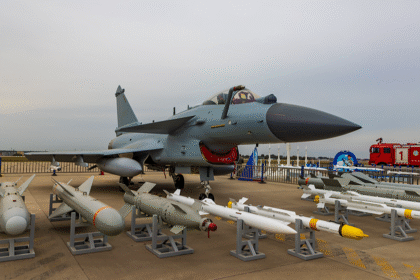





Pakistan has successfully tested the Taimoor cruise missile, an indigenously developed air-launched weapon system with a 600-kilometer range. The missile can strike land and sea targets with precision while flying at low altitudes to evade air defenses. Developed by the Pakistan Air Force with national defense scientists, this achievement demonstrates Pakistan’s growing technological self-reliance and enhances its conventional deterrence capabilities in South Asia’s complex security environment.
ISLAMABAD — Pakistan has achieved a significant milestone in its defense modernization program with the successful flight test of the Taimoor Weapon System, an indigenously developed air-launched cruise missile that demonstrates the country’s growing technological self-reliance in aerospace and defense manufacturing.
Technical Specifications and Capabilities
The Taimoor cruise missile represents a sophisticated addition to Pakistan’s conventional deterrence arsenal. According to the Inter-Services Public Relations (ISPR), the media wing of Pakistan’s armed forces, the weapon system boasts several advanced features:
Range and Payload: The missile can engage both land and sea targets with high precision at ranges up to 600 kilometers while carrying a conventional warhead. This extended range significantly expands the Pakistan Air Force’s operational reach across the region.
Stealth and Survivability: One of Taimoor’s most critical design features is its ability to fly at very low altitudes, enabling it to evade hostile air defense systems and advanced missile defense networks. This terrain-hugging flight profile makes detection and interception considerably more challenging for adversaries.
Guidance Systems: The missile incorporates advanced navigation and guidance technology, ensuring precision strikes against designated targets. These systems allow for accurate engagement even in complex operational environments.
Strategic Significance
The successful test of the Taimoor missile carries substantial implications for Pakistan’s defense posture and regional security dynamics:
Operational Flexibility: Air Chief Marshal Zaheer Ahmed Baber Sidhu, Chief of the Air Staff, emphasized that the weapon system significantly enhances the Pakistan Air Force’s operational flexibility. The ability to launch precision strikes from airborne platforms at standoff ranges provides commanders with multiple options during potential conflict scenarios.
Conventional Deterrence: Pakistan has consistently maintained that its defense development focuses on establishing credible conventional deterrence. The Taimoor missile strengthens this posture by providing a potent strike capability that doesn’t rely on nuclear weapons, potentially lowering the threshold for certain types of military responses.
Technological Self-Reliance: Perhaps most importantly, the indigenous development of Taimoor demonstrates Pakistan’s advancing capabilities in complex weapons systems. This reduces dependence on foreign suppliers and builds domestic expertise in critical defense technologies.
Development and Production
The missile’s development involved collaboration between the Pakistan Air Force, defense scientists, and engineers from various national institutions. The test launch was attended by senior officers from the Pakistan Armed Forces alongside the technical teams responsible for the weapon’s creation.
Air Chief Marshal Sidhu congratulated the entire development team for their dedication and professional excellence, highlighting that such achievements reflect Pakistan’s commitment to self-sufficiency in defense technology within a complex regional security environment.
Broader Context: Pakistan’s Defense Modernization
The Taimoor test follows a pattern of indigenous defense development successes:
Naval Capabilities: In November of the previous year, the Pakistan Navy successfully tested an indigenously developed ship-launched anti-ship ballistic missile. This weapon system can engage both land and sea targets with advanced guidance and maneuverability capabilities, complementing the Air Force’s new cruise missile.
Integrated Approach: Together, these developments indicate a comprehensive approach to building multi-domain strike capabilities across Pakistan’s armed services, with each branch developing specialized systems suited to their operational requirements.
Regional Security Implications
The development and testing of advanced weapon systems like Taimoor occur within South Asia’s complex security environment, where multiple nations are modernizing their military capabilities:
Strategic Balance: Pakistan has long emphasized maintaining strategic balance in the region, particularly vis-à-vis neighboring India, which has also been developing and acquiring advanced cruise missile systems and air defense networks.
Conventional-Nuclear Nexus: By enhancing conventional strike capabilities, Pakistan aims to create more options below the nuclear threshold, potentially contributing to crisis stability by providing alternatives to nuclear escalation in hypothetical conflict scenarios.
Technical Challenges and Achievements
Developing an air-launched cruise missile with 600-kilometer range involves overcoming numerous technical hurdles:
Propulsion Systems: Sustaining flight over such distances while maintaining low altitude requires efficient propulsion systems that balance fuel consumption with performance.
Miniaturization: Fitting advanced guidance, navigation, and control systems into a package that can be carried by combat aircraft demands sophisticated miniaturization and integration.
Testing and Validation: Ensuring reliability across various environmental conditions and operational scenarios requires extensive testing programs, making this successful flight test a validation of years of development work.
Future Prospects
The successful Taimoor test likely represents one step in an ongoing development program:
Variants and Upgrades: Defense analysts expect that Pakistan may develop variants of the system with different ranges, warhead configurations, or specialized capabilities for specific mission profiles.
Platform Integration: The weapon system will need to be integrated with various Pakistan Air Force combat aircraft, requiring additional testing and pilot training programs.
Production and Deployment: Moving from successful testing to operational deployment involves establishing production facilities and integrating the weapon into existing operational doctrines and command structures.
International Context
Pakistan’s cruise missile development occurs within a broader global context of proliferation and arms control:
Export Controls: The Missile Technology Control Regime (MTCR) regulates the transfer of missile technology, making indigenous development crucial for nations seeking advanced capabilities.
Strategic Autonomy: Developing domestic defense industries allows nations to maintain strategic autonomy and avoid dependence on foreign suppliers who may impose restrictions during times of tension.
Conclusion
The successful test of the Taimoor cruise missile represents a significant achievement in Pakistan’s defense modernization efforts. By demonstrating the capability to indigenously develop sophisticated weapons systems, Pakistan has taken a substantial step toward technological self reliance in critical defense sectors.
The weapon system enhances the Pakistan Air Force’s conventional strike capabilities, provides greater operational flexibility, and contributes to national defense objectives within a challenging regional security environment. As Pakistan continues to develop and refine such systems, the Taimoor test stands as evidence of the country’s growing technological maturity in aerospace and defense manufacturing.
For Pakistan’s defense establishment, the successful test validates years of investment in domestic research and development, while for regional observers, it underscores the continuing evolution of military capabilities across South Asia a reminder of the dynamic nature of strategic competition in one of the world’s most complex security environments.
Discover more from JUST UNTOLD STORY
Subscribe to get the latest posts sent to your email.