




The Pakistan Navy conducted a comprehensive military exercise in the North Arabian Sea, successfully testing the LY-80(N) surface to air missile system, loitering munitions, and an unmanned surface vessel. Chief of Naval Staff Admiral Naveed Ashraf described the drills as a demonstration of operational readiness and combat preparedness, while political leaders praised the tests as a major milestone in Pakistan’s defense modernization. The exercise showcased the integration of conventional and autonomous systems aligned with evolving naval warfare requirements.
The Pakistan Navy has conducted an extensive military exercise in the North Arabian Sea, successfully testing a range of advanced conventional and unmanned weapons systems in what officials described as a demonstration of the country’s evolving naval warfare capabilities.
The comprehensive drills, announced Saturday by the Inter-Services Public Relations (ISPR), Pakistan’s military media wing, featured the live firing of the LY-80(N) surface to air missile system, deployment of loitering munitions against surface targets, and open sea trials of an unmanned surface vessel marking a significant showcase of the Navy’s technological advancement and operational readiness.
Long-Range Air Defense Validation
The centerpiece of the exercise was the successful test firing of an LY-80(N) surface to air missile from a vertical launching system at extended range. According to the ISPR, the missile successfully engaged and neutralized an aerial target, validating what the Navy characterized as the long-range capabilities of its modern air defense systems.
The LY-80 system, a naval variant of the Chinese HQ-16 surface to air missile, represents a critical component of Pakistan’s layered maritime defense architecture. The successful test at extended range demonstrates the Navy’s ability to provide area air defense for naval task groups and critical maritime assets against aerial threats including aircraft, helicopters, and cruise missiles.
The vertical launching system employed in the test offers significant tactical advantages, allowing for rapid engagement of multiple targets from any direction without requiring the ship to maneuver, a crucial capability in modern naval combat scenarios.
Precision Strike with Loitering Munitions
The exercise also featured the operational deployment of loitering munitions often referred to as “suicide drones” or “kamikaze drones” against surface targets. These weapons, which combine the characteristics of cruise missiles and unmanned aerial vehicles, can hover over a designated area for extended periods before striking targets with precision.
According to the ISPR, the loitering munitions successfully destroyed their assigned targets, demonstrating the Pakistan Navy’s precision strike capabilities in contemporary naval warfare. These weapons offer commanders significant tactical flexibility, allowing for target identification and engagement in real time while maintaining the ability to abort missions if necessary.
The integration of loitering munitions into Pakistan’s naval arsenal reflects global trends in maritime warfare, where such systems are increasingly valued for their ability to conduct intelligence, surveillance, and reconnaissance missions while maintaining a lethal strike capability.
Autonomous Surface Vessel Trials
In a separate component of the exercise, the Pakistan Navy conducted open-sea trials of an unmanned surface vessel under challenging maritime conditions. The autonomous craft underwent rigorous testing of its manoeuvrability, precision navigation capabilities, and performance in adverse weather conditions.
The ISPR described the platform as a low risk, high impact system offering “the stealth of a tactical interceptor,” with the trials validating its ability to combine high speed performance with mission critical durability. Unmanned surface vessels represent an emerging technology in naval warfare, offering capabilities ranging from intelligence gathering and mine countermeasures to anti submarine warfare and surface combat operations.
The successful trials underscore Pakistan’s commitment to incorporating autonomous systems into its naval operations, reducing risk to personnel while expanding operational capabilities across multiple mission sets.
Strategic Significance and Command Perspective
The exercise was witnessed by the Commander Pakistan Fleet and involved the integrated employment of both conventional and unmanned systems, highlighting the Navy’s evolving approach to naval warfare and its ability to operate advanced technologies in complex operational environments.
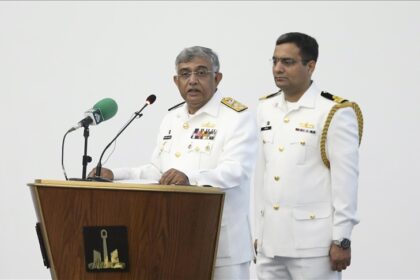
Chief of the Naval Staff Admiral Naveed Ashraf praised the drills as a demonstration of the Pakistan Navy’s operational readiness and combat preparedness. He commended officers and personnel for their professionalism and operational competence, reaffirming the Navy’s commitment to ensuring Pakistan’s seaward defense and safeguarding national maritime interests under all circumstances.
The exercise showcased what the ISPR characterized as capabilities aligned with “the dictates of evolving naval warfare,” reflecting the global shift toward network-centric operations, autonomous systems, and integrated multi-domain combat capabilities.
Political Support and National Pride
The successful tests drew praise from senior political figures, underscoring the broader national significance attributed to defense technological advancement.
Sindh Chief Minister Murad Ali Shah described the LY-80 missile test as “an important milestone for national defense,” congratulating the Pakistan Navy, scientists, and engineers involved in the program. “Pakistani scientists have raised the country’s head with pride through the LY-80 air defence missile system,” Shah said, praising what he characterized as the Navy’s professional capability and reliance on indigenous technology.
The chief minister added that the successful test sent “a clear message to adversaries” and represented an important step toward making Pakistan’s defense “impregnable.” He emphasized that self-reliance in modern defense technology constituted a major national achievement and that “there would be no compromise on national security.”
Federal Interior Minister Mohsin Naqvi similarly congratulated the Pakistan Navy’s scientists and engineers, describing the missile test as “an important milestone for the country’s defence sector.” Naqvi credited the leadership of Chief of Defence Staff Field Marshal General Asim Munir and Chief of Naval Staff Admiral Naveed Ashraf, characterizing the test as “a credible step towards strengthening the defence of Pakistan’s maritime borders.”
Regional Context and Strategic Implications
The comprehensive exercise comes amid an increasingly complex maritime security environment in the Indian Ocean region, where regional navies are rapidly modernizing their capabilities and incorporating advanced technologies into their operational arsenals.
The successful integration of surface to air missiles, loitering munitions, and unmanned surface vessels into operational drills reflects Pakistan’s commitment to maintaining credible deterrence capabilities and protecting its extensive maritime interests, including critical sea lines of communication, exclusive economic zone resources, and coastal security.
The emphasis on autonomous and unmanned systems aligns with global naval trends, as maritime forces worldwide seek to leverage emerging technologies to extend operational reach, reduce personnel risk, and achieve greater efficiency in resource allocation. Major naval powers including the United States, China, and regional actors have all prioritized the development and integration of unmanned systems across surface, subsurface, and aerial domains.
Technology and Capabilities Assessment
The LY-80(N) system represents a significant enhancement to Pakistan Navy’s air defense capabilities. Based on the land-based HQ-16 system, the naval variant provides medium to long range air defense with reported engagement ranges exceeding 40 kilometers. The system’s vertical launch capability allows for 360 degree coverage and rapid engagement of multiple targets, critical capabilities in modern naval air defense operations.
The incorporation of loitering munitions adds a precision strike capability that complements traditional naval gunfire and anti ship missiles, offering commanders additional options for engaging surface and potentially land based targets with reduced collateral damage risk and greater flexibility in complex operational scenarios.
The unmanned surface vessel trials, while details remain limited, represent Pakistan’s entry into an increasingly important domain of naval warfare. Such platforms offer potential applications across intelligence gathering, mine countermeasures, anti-submarine warfare, and surface combat operations, with the additional benefit of reducing risk to personnel in high-threat environments.
Looking Forward
The successful completion of this comprehensive exercise demonstrates the Pakistan Navy’s commitment to maintaining operational readiness and technological relevance in an evolving strategic environment. The integration of advanced conventional systems with emerging autonomous technologies reflects a balanced approach to naval modernization, leveraging both proven capabilities and innovative platforms.
As regional maritime competition intensifies and technology continues to reshape naval warfare, Pakistan’s successful demonstration of these capabilities signals its determination to maintain credible seaward defense and protect national maritime interests. The exercise also highlights the growing importance of indigenous technological development and the integration of autonomous systems in Pakistan’s broader defense strategy.
The emphasis on self reliance in defense technology, highlighted by political leaders, suggests continued investment in domestic research and development capabilities, potentially reducing dependence on foreign suppliers while building indigenous expertise in critical defense technologies.
For regional observers and defense analysts, the exercise provides insight into Pakistan Navy’s operational priorities, technological capabilities, and strategic approach to maritime security in an increasingly complex and contested maritime domain.
Discover more from JUST UNTOLD STORY
Subscribe to get the latest posts sent to your email.