



Afghanistan-based individuals orchestrated major terrorist incidents in Pakistan throughout 2025, military officials revealed Tuesday. In what was declared a “landmark year” for counter-terrorism, Pakistani forces conducted over 75,000 intelligence based operations across the country, with Khyber Pakhtunkhwa and Balochistan provinces bearing the brunt of violence. The military cited international recognition of Afghanistan as a terrorist base and highlighted challenges from what it termed a “political-terror nexus” in northwestern regions.
RAWALPINDI — Afghanistan-based individuals were behind major high-impact terrorist attacks in Pakistan throughout 2025, the country’s military announced Tuesday, as officials detailed what they described as an unprecedented escalation in counter-terrorism operations.
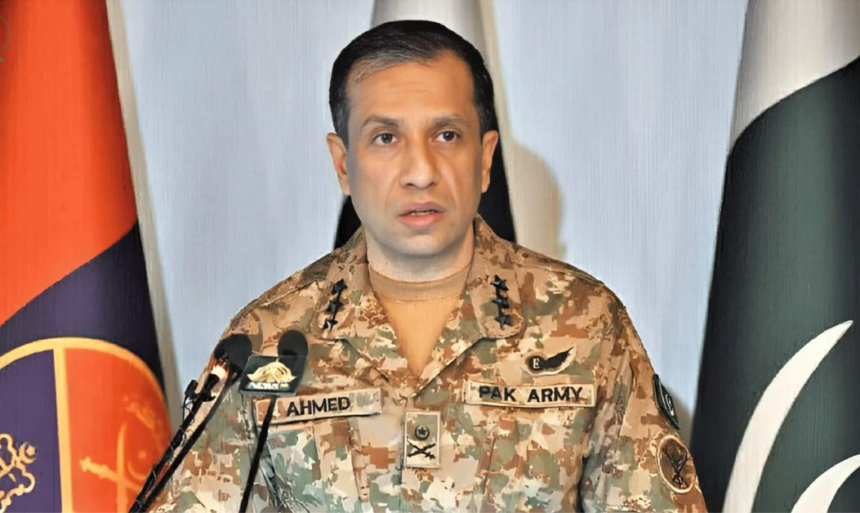
Lieutenant General Ahmed Sharif Chaudhry, Director General of Inter-Services Public Relations (ISPR), Pakistan’s military media wing, made the revelation during a comprehensive press briefing focused exclusively on the nation’s fight against terrorism, which he characterized as “the biggest threat” facing the country.
A “Landmark Year” in Counter-Terrorism
The military spokesman declared 2025 a “landmark and consequential year” in Pakistan’s counter-terrorism campaign, citing four key developments that marked a turning point in the decades-long struggle against militant violence.
According to Lt. Gen. Chaudhry, the past year witnessed “unprecedented intensity in counter-terrorism efforts” and brought “complete clarity” to both the state and citizens regarding the nature and origins of terrorist threats facing the nation.
He emphasized that public understanding has crystallized around the government’s position that militant groups have no legitimate religious basis. “These terrorists are khawarij, they have no relation with Islam,” the general stated, using a religious term for religious deviants that the Pakistani state has adopted to describe the banned Fitnah Al Khawarij (TTP).
The spokesman also employed the term “Fitna-al-Hindustan” for Balochistan-based terrorist organizations, reflecting Pakistan’s longstanding accusations of Indian involvement in supporting militant activities within its borders.
International Recognition and Domestic Consensus
Lt. Gen. Chaudhry claimed that 2025 marked a shift in international perceptions, with the world acknowledging Pakistan’s concerns about Afghanistan serving as a “base for terrorist operations.” This assertion comes amid ongoing tensions between Islamabad and the Taliban government in Kabul over alleged sanctuaries for anti-Pakistan militants.
The military official also highlighted renewed focus on implementing the National Action Plan (NAP), a comprehensive counter-terrorism strategy, and noted that the framework informed Operation Azm-i-Istehkam, a major military initiative launched in 2024. He said political parties and civil society have reached consensus on the necessity of fully implementing the NAP, though he acknowledged “there are still deficiencies, and there is a lot of room for improvement.”
Staggering Operational Statistics
The briefing included detailed statistics revealing the massive scale of Pakistan’s counter-terrorism campaign in 2025:
- 75,175 intelligence-based operations (IBOs) were conducted by law enforcement agencies, averaging 206 operations daily
- 5,397 terror incidents occurred across the country
- 2,597 terrorists were killed during operations
- 1,235 law enforcement personnel and civilians lost their lives
- 27 suicide bombings took place, including two carried out by female attackers
Regional Concentration of Violence
The data revealed a stark geographic pattern, with Khyber Pakhtunkhwa (KP) province bearing the brunt of terrorist violence. Of all terror incidents, 71 percent occurred in KP, while Balochistan accounted for 29 percent.
Operations were heavily concentrated in Balochistan (58,778 IBOs) and KP (14,658 IBOs), with 1,739 conducted elsewhere in Pakistan.
Suicide attacks similarly clustered in these regions: 16 in KP, 10 in Balochistan, and one in the capital Islamabad, specifically at a judicial complex.
Political Dimensions Highlighted
Addressing why KP experienced the majority of terrorist incidents, Lt. Gen. Chaudhry pointed to what he termed a “politically conducive environment” and a “political-terror nexus that is flourishing in the province.” This comment appeared to reference complex provincial political dynamics, though he did not elaborate further during the terrorism-focused briefing.
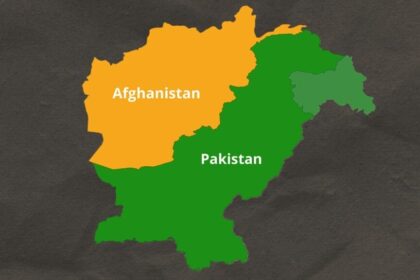
The statement comes as Pakistan continues to grapple with militant threats from multiple directions, particularly along its western border with Afghanistan, where relations with the Taliban government remain strained over cross-border militant activities.
As Pakistan enters 2026, the military’s emphasis on the Afghan connection to major attacks signals likely continued tensions with Kabul and suggests counter-terrorism will remain a dominant national security priority for the foreseeable future.
Discover more from JUST UNTOLD STORY
Subscribe to get the latest posts sent to your email.