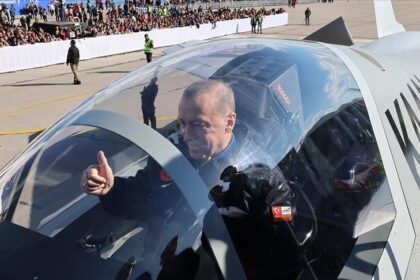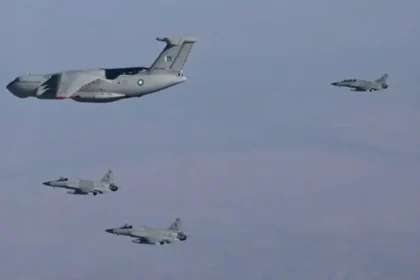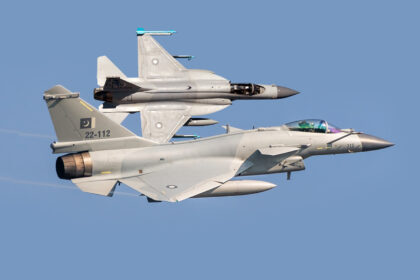



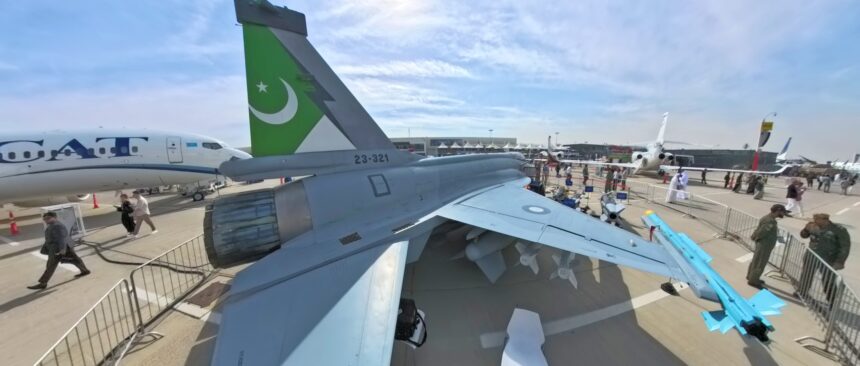

Saudi Arabia is in negotiations to acquire JF-17 Thunder multirole fighters from Pakistan in a complex $4 billion deal that would settle existing loans while dramatically expanding the kingdom’s combat aircraft diversity. If finalized alongside ongoing F-35, Eurofighter, and potential Rafale acquisitions, Saudi Arabia would operate an unprecedented five different advanced fighter types surpassing even Egypt’s historically diverse fleet. The JF-17’s compatibility with China’s formidable PL-15 missile appears central to Saudi strategic calculations, providing access to cutting edge weaponry while maintaining crucial Western defense relationships. This move reflects broader regional trends: declining Western monopolies in Gulf defense markets, China’s patient expansion into Middle Eastern military sales, and Gulf states’ sophisticated strategies of using supplier diversity as insurance against political restrictions and diplomatic leverage in an increasingly multipolar world.
- The JF-17 Thunder: An Emerging Export Success Story
- An Unprecedented Fleet Diversification Strategy
- The Strategic Rationale: More Than Meets the Eye
- Regional Context: The Arms Race Intensifies
- The China Factor: A Shifting Balance
- Technical Capabilities and Operational Integration
- Economic and Industrial Implications
- Potential Obstacles and Uncertainties
- Broader Implications for Middle Eastern Security
- Conclusion: A New Paradigm in Gulf Defense Procurement
In a development that could reshape the military aviation landscape across the Middle East, Saudi Arabia is reportedly in advanced negotiations to acquire Pakistan’s JF-17 Thunder multirole fighter jets in a complex deal worth up to $4 billion. This potential acquisition, first reported by Reuters and analyzed by Forbes, represents far more than a simple arms purchase it signals Riyadh’s ambitious strategy to assemble what could become the most diverse and capable combat aircraft fleet in the region, if not globally.
The deal’s structure is particularly noteworthy: Saudi Arabia would settle $2 billion in existing loans to Pakistan through the direct acquisition of JF-17 aircraft, while committing an additional $2 billion for associated equipment and systems. This creative financing arrangement demonstrates the increasingly sophisticated nature of defense diplomacy in the region, where economic relationships and military partnerships intertwine in complex ways.
The JF-17 Thunder: An Emerging Export Success Story
The JF-17 Thunder, a joint development between Pakistan and China, has rapidly evolved from a regional defense project into an internationally competitive multirole fighter. Pakistan’s recent export successes underscore this transformation. In early 2025, Islamabad secured a $4.6 billion contract to supply 40 JF-17s to Azerbaijan, followed shortly by a landmark deal with Libya’s National Army reportedly the first sale of the aircraft to an Arab country for 16 jets and additional military equipment valued between $4 and $4.6 billion.
Based on these precedents, analysts speculate that Saudi Arabia might acquire between 16 and 40 aircraft. Given the kingdom’s preference for cutting edge technology and its substantial financial resources, Riyadh would almost certainly pursue the latest JF-17C Block III variant. This advanced model features an active electronically scanned array (AESA) radar and, crucially, compatibility with China’s formidable PL-15 beyond visual range air to air missile a capability that may be central to Saudi Arabia’s strategic calculus.
An Unprecedented Fleet Diversification Strategy
What makes this potential acquisition particularly remarkable is the context of Saudi Arabia’s existing and planned fighter fleet. The Royal Saudi Air Force already operates one of the most formidable collections of advanced combat aircraft in the world:
Current and Committed Assets:
- More than 80 advanced F-15SA (Saudi Advanced) fighters, representing the 4.5-generation pinnacle of the legendary Eagle platform
- 68 older F-15 Strike Eagles upgraded to the cutting edge F-15 Saudi Retrofit standard
- Over 70 Eurofighter Typhoons, with an additional 48 ordered in 2018
- Active negotiations for up to 48 Lockheed Martin F-35 Lightning II fifth generation stealth fighters, a deal reportedly favored by President Donald Trump
Potential Future Additions:
- 54 Dassault Rafale fighters, discussed with France in 2023 when Germany blocked the expanded Eurofighter order (though this deal’s status remains uncertain)
- Now, potentially 16-40 JF-17 Thunder aircraft
If all these acquisitions come to fruition, Saudi Arabia would operate an unprecedented five different advanced fighter types simultaneously—a level of diversity that would surpass even countries known for maintaining varied fleets, such as Egypt.
The Strategic Rationale: More Than Meets the Eye
On the surface, Saudi Arabia’s interest in the JF-17 seems counterintuitive. Why would a kingdom already operating top-tier American and European fighters seek a less prestigious Sino Pakistani aircraft? The answer lies in several interconnected strategic considerations:
1. Access to China’s PL-15 Missile
The PL-15 air-to-air missile represents one of the most significant developments in aerial combat technology in recent years. With an estimated range exceeding that of the American AIM-120 AMRAAM and the European Meteor, the PL-15 has already proven its combat effectiveness most notably when Pakistan reportedly used it to shoot down at least one Indian Rafale during brief clashes in May 2025.
For Saudi Arabia, acquiring JF-17s provides a politically palatable pathway to obtaining PL-15 missiles. Purchasing the aircraft from Pakistan and the missiles from China may generate less friction with Washington than directly acquiring Chinese J-10C fighters with PL-15s from Beijing. This approach allows Riyadh to maintain its crucial security relationship with the United States while simultaneously hedging its bets and expanding its military capabilities.
Significantly, unlike Egypt which has been denied beyond visual range AIM-120 missiles for its F-16 fleet for decades Saudi Arabia already possesses both AIM-120s and Meteor missiles. Adding PL-15s would give the kingdom access to all three of the world’s premier beyond visual range air to air missiles, an unprecedented capability that would provide Saudi pilots with maximum tactical flexibility.
2. Strategic Hedging and Supplier Diversification
Saudi Arabia’s defense procurement strategy increasingly reflects a sophisticated understanding of geopolitical risk. Historically, the kingdom diversified between American and British suppliers, with its Eurofighter fleet complementing its American F-15s. However, recent experiences such as Germany’s blocking of additional Eurofighter sales have demonstrated the vulnerabilities inherent in depending on Western suppliers subject to parliamentary oversight and shifting political winds.
The JF-17 acquisition represents a strategic hedge against future Western arms embargoes or politically motivated sales restrictions. Pakistan and China, with different political systems and strategic interests, are less likely to impose conditions or withhold supplies based on Saudi Arabia’s domestic policies or regional activities.
3. Negotiating Leverage and Competitive Pressure
Saudi Arabia’s 2023 negotiations with France for Rafale fighters, coming after Germany blocked expanded Eurofighter sales, may have served dual purposes: genuine interest in French aircraft and a signal to the Eurofighter consortium that Riyadh possessed alternative options. The kingdom may be employing similar tactics across its entire fighter procurement portfolio.
By demonstrating willingness to consider Chinese origin aircraft, Saudi Arabia strengthens its negotiating position with American suppliers on crucial deals like the F-35 acquisition. The implicit message is clear: while the kingdom prefers Western equipment, it will not be held hostage to any single supplier’s political constraints or pricing demands.
4. Debt-for-Equipment Arrangements
The creative financing structure settling existing loans through aircraft purchases provides Pakistan with a face-saving mechanism to address its debt obligations while enabling Saudi Arabia to support a strategic partner. This approach strengthens bilateral ties while advancing military modernization objectives, exemplifying the complex interplay of economics and security in contemporary Middle Eastern relations.
Regional Context: The Arms Race Intensifies
Saudi Arabia’s potential JF-17 acquisition must be understood within the broader context of an accelerating regional arms race and shifting patterns of defense procurement across the Middle East.
Qatar’s Transformation:
Nearly a decade after enduring a blockade imposed by Saudi Arabia and the United Arab Emirates, Qatar has fundamentally transformed its air force. Doha has acquired three different types of 4.5 generation fighters it had never previously operated: F-15QA (Qatar Advanced), Rafales, and Eurofighters. This diversification strategy reflects Qatar’s determination to never again be vulnerable to regional pressure, while also demonstrating that even smaller Gulf states can maintain sophisticated, multi source fleets.
Egypt’s Persistent Diversification:
Egypt has long pursued the most diversified fighter fleet in the region, driven by decades of American restrictions on munitions and technology transfers. Over the past decade, Cairo has acquired French Rafales and Russian MiG-29M/M2 fighters to complement its substantial but capability limited fleet of American F-16s.
Egypt’s frustration stems from Washington’s longstanding refusal to supply beyond-visual-range AIM-120 AMRAAM missiles for its F-16s, leaving Egyptian pilots at a potentially fatal disadvantage in any aerial engagement with Israeli or other regional air forces equipped with such weapons. Even when France sold Egypt Rafales, they did not include the comparable Meteor missile, which exceeds the AIM 120’s range.
Currently, Egypt is reportedly negotiating with China for 4.5-generation J-10C Vigorous Dragon jets and possibly fifth-generation Shenyang J-35 (FC-31) stealth fighters. Cairo’s interest in Chinese aircraft stems directly from China’s willingness to supply the PL-15 missile without the political constraints that have hampered Egyptian access to Western beyond visual range weapons.
Egypt’s experience serves as a cautionary tale that Saudi Arabia has clearly absorbed. Despite currently enjoying access to top tier American and European weapons, Riyadh understands that political circumstances can change rapidly, and diversification provides insurance against future restrictions.
The United Arab Emirates Model:
The UAE has long maintained a sophisticated procurement strategy of playing American and French suppliers against each other to secure optimal deals. In the late 1990s, Abu Dhabi’s acquisition of 30 French Mirage 2000-9s demonstrated to Washington that it possessed viable non-American options. The UAE subsequently secured an unprecedented deal for a unique F-16 variant the F-16E/F Block 60 tailored to Emirati specifications and more advanced than those flown by the U.S. Air Force itself.
More recently, after suspending its deal for 50 F-35s due to concerns over security conditions and restrictions, the UAE secured a landmark contract for 80 advanced Rafale F4s, demonstrating that even the allure of fifth-generation stealth aircraft won’t compel acceptance of unpalatable terms.
Saudi Arabia appears to be adopting and expanding upon the UAE’s playbook, but on a far grander scale befitting its greater size, wealth, and regional ambitions.
The China Factor: A Shifting Balance
The potential JF-17 deal represents another data point in China’s expanding defense relationships across the Middle East. The U.S. Department of Defense has listed Saudi Arabia among “interested clients” in negotiations for China’s J-35 fifth-generation stealth fighter, suggesting that the JF-17 might represent just the beginning of deeper Sino-Saudi defense cooperation.
For Beijing, these potential sales offer multiple strategic benefits:
- Establishing a foothold in Gulf defense markets traditionally dominated by Western suppliers
- Demonstrating the combat credibility of Chinese weapons systems in a high-profile regional context
- Strengthening political and economic ties with one of the world’s most influential energy producers
- Creating dependencies that could complicate Western efforts to maintain regional security architectures
For Washington, Saudi Arabia’s apparent openness to Chinese aircraft presents a dilemma. American officials must balance the desire to maintain exclusive or near-exclusive defense relationships with Gulf partners against the risk that overly restrictive policies might drive those partners further toward Chinese alternatives.
The JF-17’s compatibility with the PL-15 missile is particularly significant in this context. If Saudi Arabia acquires both the aircraft and the missiles, it would mark the first time a major American security partner in the Gulf operates Chinese air-to-air weapons. This precedent could accelerate similar acquisitions by other regional states, gradually eroding American dominance in a critical technology sector.
Technical Capabilities and Operational Integration
The JF-17C Block III represents a substantial advancement over earlier variants, incorporating features that bring it closer to true 4.5-generation capability:
Key Systems:
- AESA radar providing enhanced detection range, resolution, and electronic warfare resistance
- Modern cockpit with wide area display and helmet mounted sight
- In flight refueling capability extending operational range
- Advanced electronic warfare suite
- Compatibility with a diverse weapons package including Chinese, Pakistani, and potentially Western munitions
Performance Characteristics:
- Maximum speed of approximately Mach 1.6
- Combat radius of roughly 1,350 kilometers
- Seven hardpoints for weapons and external stores
- Relatively low operating costs compared to Western 4.5-generation fighters
For the Royal Saudi Air Force, integrating JF-17s alongside F-15s, Eurofighters, and potentially F-35s and Rafales presents both opportunities and challenges. The diversity would complicate logistics, maintenance, and training, requiring separate supply chains, specialized technical personnel, and distinct pilot training programs for each aircraft type.
However, this complexity also provides strategic advantages. Different aircraft could be optimized for different mission sets: F-35s for high end contested environments requiring stealth; F-15SAs for air superiority and long-range strike; Eurofighters for air defense; Rafales (if acquired) for multirole flexibility; and JF-17s for lower intensity operations, training, or missions where the loss of a less expensive platform would be more acceptable.
The JF-17 could also serve as an ideal platform for employing PL-15 missiles, potentially reserved for scenarios where the use of Chinese weapons would be politically advantageous or where their specific capabilities provide tactical benefits.
Economic and Industrial Implications
Beyond immediate military capabilities, the JF-17 deal could have significant economic and industrial dimensions. Pakistan has sought to develop its defense industrial base, and large export orders like the Saudi deal (if consummated) provide crucial revenue and experience.
For Saudi Arabia, the deal might include offsets, technology transfer arrangements, or even local assembly provisions that would support Vision 2030’s goals of developing domestic defense industries. The kingdom has already established partnerships with various international defense firms and seeks to localize significant portions of defense spending.
The relatively lower cost of JF-17s compared to Western fighters typically estimated at $25-30 million per aircraft versus $80-120 million for advanced F-15s, Eurofighters, or Rafales means Saudi Arabia could acquire a larger number of aircraft for the same investment, potentially using them to expand overall force structure while reserving premium Western fighters for the most demanding missions.
Potential Obstacles and Uncertainties
Despite the reported negotiations, several factors could derail or delay the JF-17 deal:
American Pressure:
Washington may object to Saudi acquisition of Chinese-origin weapons systems, particularly those compatible with advanced Chinese missiles. While the U.S. has less leverage than it once did given Saudi Arabia’s willingness to diversify suppliers, American opposition could still complicate the deal or lead to modifications.
Technical Compatibility:
Integrating JF-17s into an air force built around Western command, control, and communications systems may prove more challenging than anticipated, potentially reducing the aircraft’s operational value.
Changing Strategic Priorities:
Saudi Arabia’s defense requirements evolve in response to regional threats. Shifting assessments of the Iran challenge, Yemen operations, or other contingencies might lead Riyadh to prioritize different capabilities.
Alternative Deals:
If the F-35 deal progresses rapidly, or if the Rafale negotiations resume favorably, Saudi Arabia might reconsider whether it needs a fifth advanced fighter type, particularly one that would be the most distinct from its existing Western-oriented fleet.
Broader Implications for Middle Eastern Security
Saudi Arabia’s potential JF-17 acquisition reflects and reinforces several broader trends in Middle Eastern security dynamics:
1. Declining Western Monopoly:
The era of exclusive Western dominance in Gulf defense markets is ending. While American and European systems remain prestigious and capable, their suppliers’ willingness to impose political conditions or restrict technology transfers creates opportunities for alternative suppliers.
2. Rise of Middle Power Defense Exporters:
Countries like Pakistan, Turkey, and South Korea are emerging as significant defense exporters, offering capable systems without the political baggage of great power suppliers. This trend empowers regional states with greater procurement flexibility.
3. China’s Strategic Patience:
Beijing’s approach of gradually expanding defense relationships through less controversial platforms like the JF-17 before potentially offering more advanced systems like the J-35 demonstrates strategic sophistication. Rather than immediately competing head to head with American fifth generation offerings, China establishes relationships and proves reliability through lower-tier systems.
4. Complexity as Strategy:
Gulf states increasingly view fleet complexity not as a bug but as a feature a deliberate strategy to maximize negotiating leverage, ensure against supply disruptions, and complicate potential adversaries’ planning.
Conclusion: A New Paradigm in Gulf Defense Procurement
Saudi Arabia’s potential acquisition of JF-17 Thunder fighters represents far more than the purchase of 16-40 aircraft. It signals a fundamental shift in how the kingdom and potentially other Gulf states approach defense procurement in an increasingly multipolar world.
By potentially assembling a fleet comprising American F-15s and F-35s, European Eurofighters and Rafales, and Sino Pakistani JF-17s, Saudi Arabia would achieve unprecedented strategic flexibility. This diversification provides insurance against supplier restrictions, maximizes access to advanced weapons like the PL-15 missile, and creates complex interdependencies that enhance the kingdom’s diplomatic leverage across multiple relationships.
The deal also reflects the maturation of Saudi strategic thinking. Rather than viewing defense procurement purely through the lens of acquiring the most advanced individual platforms, Riyadh increasingly considers how different systems complement each other, how supplier relationships can be leveraged for broader strategic advantage, and how dependencies can be managed to maximize autonomy.
For the broader Middle East, Saudi Arabia’s approach may establish a new template. Other regional states with sufficient resources will likely pursue similar diversification strategies, accelerating the decline of Western monopolies in defense markets and creating new opportunities for emerging suppliers from China, Pakistan, Turkey, South Korea, and elsewhere.
The ultimate question is not whether Saudi Arabia will acquire JF-17s negotiations could still fail, and deals can always be canceled but rather what this potential acquisition reveals about the kingdom’s evolving strategic vision and the changing dynamics of power, influence, and security in the 21st century Middle East.
As the region navigates increasingly complex threat environments, shifting great power relationships, and rapid technological change, flexibility, diversification, and strategic autonomy will likely prove more valuable than any single weapons system, no matter how advanced. Saudi Arabia’s potential JF-17 deal suggests the kingdom has absorbed this lesson and is positioning itself accordingly for an uncertain future.
Discover more from JUST UNTOLD STORY
Subscribe to get the latest posts sent to your email.