



Pakistan is expanding its military footprint across the Arab world through major arms deals, including a reported $1.5 billion agreement with Sudan. Anchored by a defense pact with Saudi Arabia, the country is marketing its JF-17 Thunder fighter jets to multiple nations, though analysts warn navigating regional rivalries will prove challenging.
Islamabad, Pakistan – Pakistan is positioning itself as an emerging arms supplier to the Arab world, with a series of weapons deals that could reshape regional security dynamics and the country’s defense industry profile.
The South Asian nation is reportedly finalizing a $1.5 billion agreement to sell fighter jets and weapons to Sudan’s military, according to Reuters. While modest by global arms deal standards, analysts say the transaction could prove pivotal in Sudan’s brutal civil war, now in its third year, which has killed tens of thousands and displaced millions.
The Sudan deal represents the latest development in Pakistan’s growing military presence across the Middle East and North Africa, marking a significant shift from its traditional role of merely training Arab allied forces to becoming a direct supplier of advanced military hardware.
Strategic Defense Pact Anchors Expansion
At the heart of Pakistan’s enhanced regional influence is the Strategic Mutual Defence Agreement (SMDA) signed with Saudi Arabia in September. The pact came weeks after heightened regional tensions raised questions about U.S. security commitments to Gulf allies.
Since the agreement, Saudi Arabia has reportedly expressed interest in Pakistan’s JF-17 Thunder fighter jet, despite operating one of the world’s most sophisticated air forces equipped primarily with American and European aircraft, including plans to acquire 48 advanced F-35 jets.
“With the SMDA between Pakistan and Saudi Arabia, it makes a lot of sense for there to be a degree of commonality in systems,” said Amir Husain, a Texas-based defense technology analyst. “Saudi Arabia is helping countries in the region, such as Libya, Somalia and Sudan, attain stability. The JF-17, and the Royal Saudi Air Force’s familiarity with this platform, can achieve these regional stabilization aims.”
Former Pakistan Air Force officer Adil Sultan suggested Saudi Arabia may be diversifying its defense suppliers amid shifting geopolitical realities, viewing Pakistan as a “reliable partner” that would “enhance interoperability” between the two air forces.
The JF-17 Thunder: Battle Tested and Budget Friendly
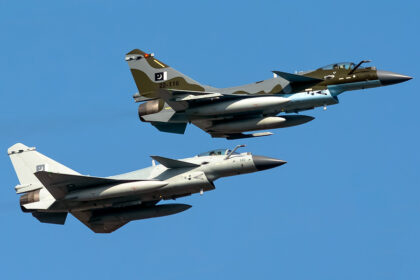
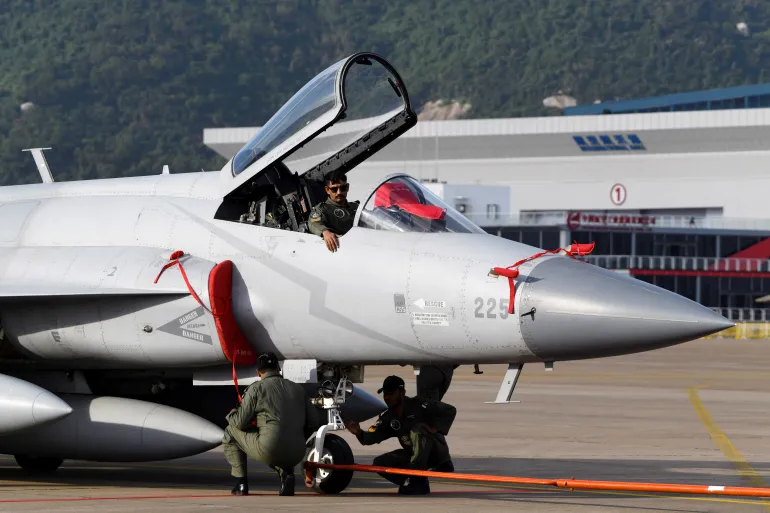
The JF-17 Thunder, jointly produced by Pakistan Aeronautical Complex and China’s Chengdu Aircraft Corporation, has emerged as the centerpiece of Pakistan’s arms export strategy. Production is split 58-42 between Pakistan and China, with Pakistan manufacturing the airframe and China supplying avionics.
Classified as a 4.5 generation fighter, the latest Block 3 variant features air to air and air to surface capabilities, advanced avionics, Active Electronically Scanned Array (AESA) radar, electronic warfare systems, and beyond-visual-range missile capability. Pakistan’s Kamra facility can produce 20 to 25 aircraft annually.
At $25-30 million per aircraft, the JF-17 offers a cost effective alternative to Western-manufactured jets. Azerbaijan, Nigeria, and Myanmar currently operate the aircraft, with Bangladesh and Indonesia also expressing interest.
Interest intensified following Pakistan’s brief but intense military confrontation with India in May, during which Pakistan claimed its aircraft shot down several Indian planes. The combat exposure appears to have enhanced the jet’s credibility, as battle tested performance often outweighs price considerations for potential buyers.
Beyond Saudi Arabia, Iraq has also shown interest in the JF-17, according to Pakistan’s military. Reports suggest the aircraft is central to Sudan’s upcoming deal, while Pakistan was also planning to sell jets to Libyan rebels in December.
China Connection Adds Geopolitical Weight
The JF-17’s joint production with China provides additional strategic value beyond its technical capabilities, analysts note. The Chinese partnership gives the aircraft extra geopolitical significance in a region where Beijing is expanding its influence.
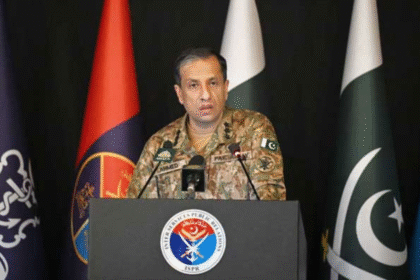
Pakistan’s Inter Services Public Relations (ISPR) did not respond to requests for comment on the various reported negotiations.
As Pakistan seeks to expand its defense industry footprint, analysts warn the country must carefully balance relationships with competing powers or risk alienating important partners in an increasingly divided Arab world.
Discover more from JUST UNTOLD STORY
Subscribe to get the latest posts sent to your email.